Aquaservice grew 16% selling bottled water. The water dispense decline story only fits half of Europe
By Zenith Water Dispense Team ·
Western Europe's bottled water cooler fleet grew by more than half since 2020. Two companies took nearly all of it. The east, with more operators, shrank.
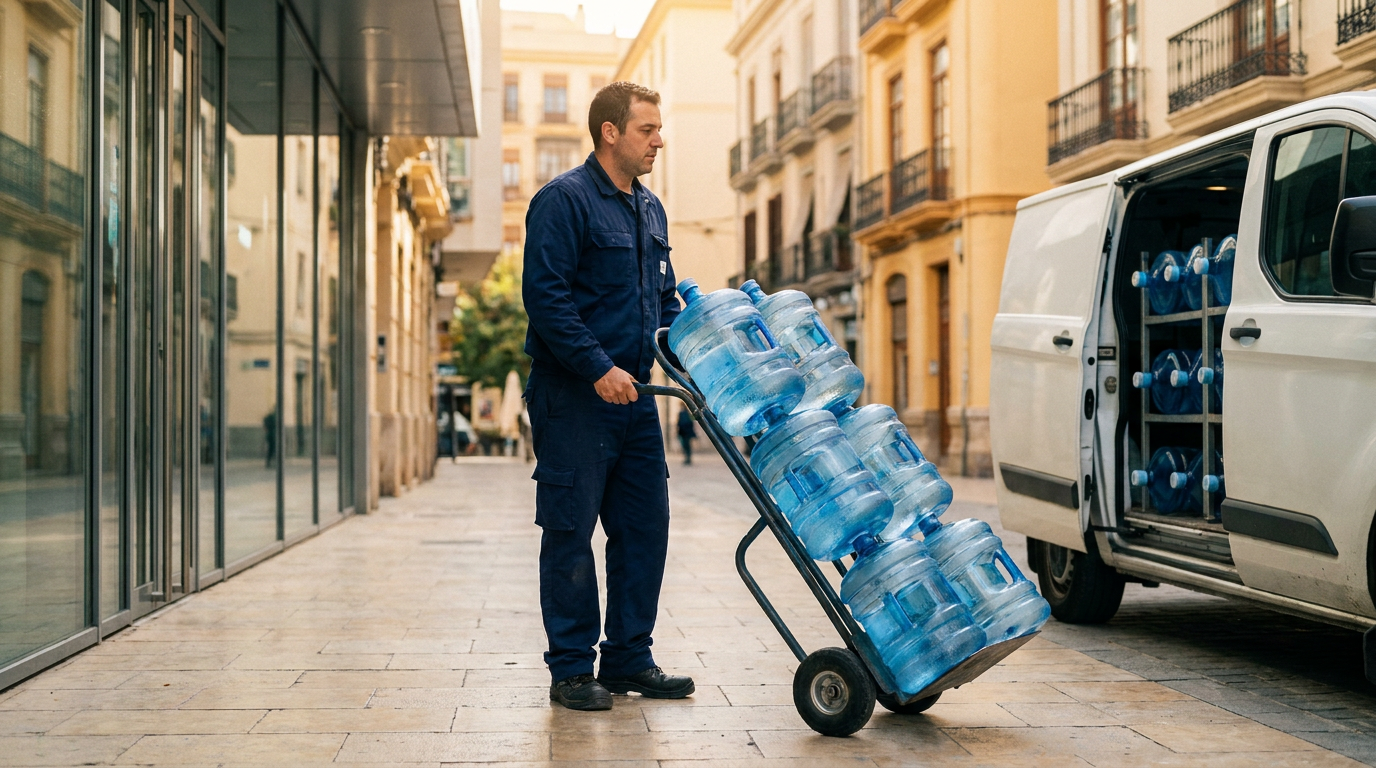
Most of the trade reads bottled water dispense as a format in run-off. I read the same numbers and see two markets wearing one name. Aquaservice is the largest bottled operator in Western Europe. It closed 2025 on 323 million euros of revenue, up 16% in a year.
Three formats share this market. BWD, or bottled water dispense, runs on refillable 19 litre bottles delivered to site. POU, or point of use, feeds a cooler from the building's own supply. ITS covers instant taps, the boiling and chilled units built into a counter.
Two companies did nearly all of the western growing
Zenith's Western European bottled model carries around fifty named operators. A sizeable unnamed tail sits behind them. The installed base in that half of Europe has grown by more than half since 2020.
A format the trade calls dying added hundreds of thousands of western machines. Two companies took nearly all of them.
The leader holds close to two fifths of the region on its own. Together the top two are approaching two thirds. Every other named operator either held share or lost it.
The two got there by opposite routes. Aquaservice built. It reports more than 900,000 customers across Spain and Portugal, seven spring sites and 82 depots. Culligan bought. It completed its combination with Waterlogic in November 2022. A year later it agreed to take a large slice of Primo Water's international business. The price was 575 million dollars in cash.
One doubled by winning streets, the other by buying books.
The east has more operators and a smaller market
Run the same read on Eastern Europe and the picture inverts. There are more named bottled operators there than in the west. The leader holds around a fifth. No two companies reach even three tenths between them. The installed base has slipped since 2020.
The half of Europe with the most bottled operators is the half that stopped growing.
That ordering matters, because the usual explanation runs the other way. A long competitor list is normally read as a young market with room to run. Here it tracks a market going sideways.
Why ownership shows up in the growth line
Route density is the whole economics of bottled delivery. Two drops on one street cost barely more than one.
Scale in bottled water dispense is local before it is national.
That is why a consolidated region can grow while a fragmented one cannot. A small operator with scattered customers pays full freight on every delivery. It cannot fund a sales team. It cannot discount to win the site next door. Buy forty of those books into one route and the same vans serve more sites per kilometre.
Bottled is the format a buyer can try for a month
Bottled keeps one advantage that no amount of mains-fed growth removes. A finance director can put two bottled coolers on one floor for a month and stop. There is no plumbing and no landlord conversation.
Bottled is the only format a customer can trial cheaply and reverse the next week.
Reversibility wins the first order. The first order is what later gets converted. Operators who drop bottled from the sales kit give that entry point away.
Mains-fed growth is real as well
None of this makes POU weak. Western mains-fed units have grown at a similar pace to bottled since 2020. The region is adding dispense points of every kind.
Both formats grew in Western Europe, and one decline story cannot hold both.
What a buyer should take from the mirror
If you are pricing a bottled business, the region is doing more work than the format.
A bottled book in a consolidated market and the same book in a fragmented one are different assets.
A single per-machine multiple hides that. Ask who holds the route density around the target. Ask whether the top two in that country are still buying. Where the answer is yes, a small book is worth more to them than to you. Where the answer is no, what you are buying is a cost base.
The next five years will test whether the eastern half follows.
Bottled grows where someone owns the route.
The question for the east is whether anyone will pay to own one. Watch for a regional buyer assembling more than one country at once. That is the move that turned the west, and it has not happened in the east yet.
📈 Free benchmarks before you commit a budget
The Water Dispense Insights resource page carries charts and benchmarks you can use straight away. No charge and no sales call attached.
P.S. Two names took almost all the growth in half of Europe. Knowing which two, in which country, is the whole job. Company-level unit shares for every operator sit country by country inside the 2026 Zenith Water Dispense Market Reports. A five-year unit history runs behind each name. Every country in Europe has its own file. Beyond that the set reaches Mexico, Turkey, the UAE, South Korea and Japan, for the asking. Homes and workplaces are counted apart in every file. You can have the Excel on its own, or a written report sitting on top of it. Trusted by industry leaders since 1998. See who holds your market.