The smallest water cooler markets in Europe earn the most per machine. Here is the lesson.
By Zenith Water Dispense Team ·
Some of the priciest water cooler markets in Europe are also among the smallest. Austria, Norway and Switzerland run tiny fleets yet earn far more per machine than big markets like Spain. This piece explains why value per machine beats unit count, and what it means for operators pruning a book and buyers underwriting one.
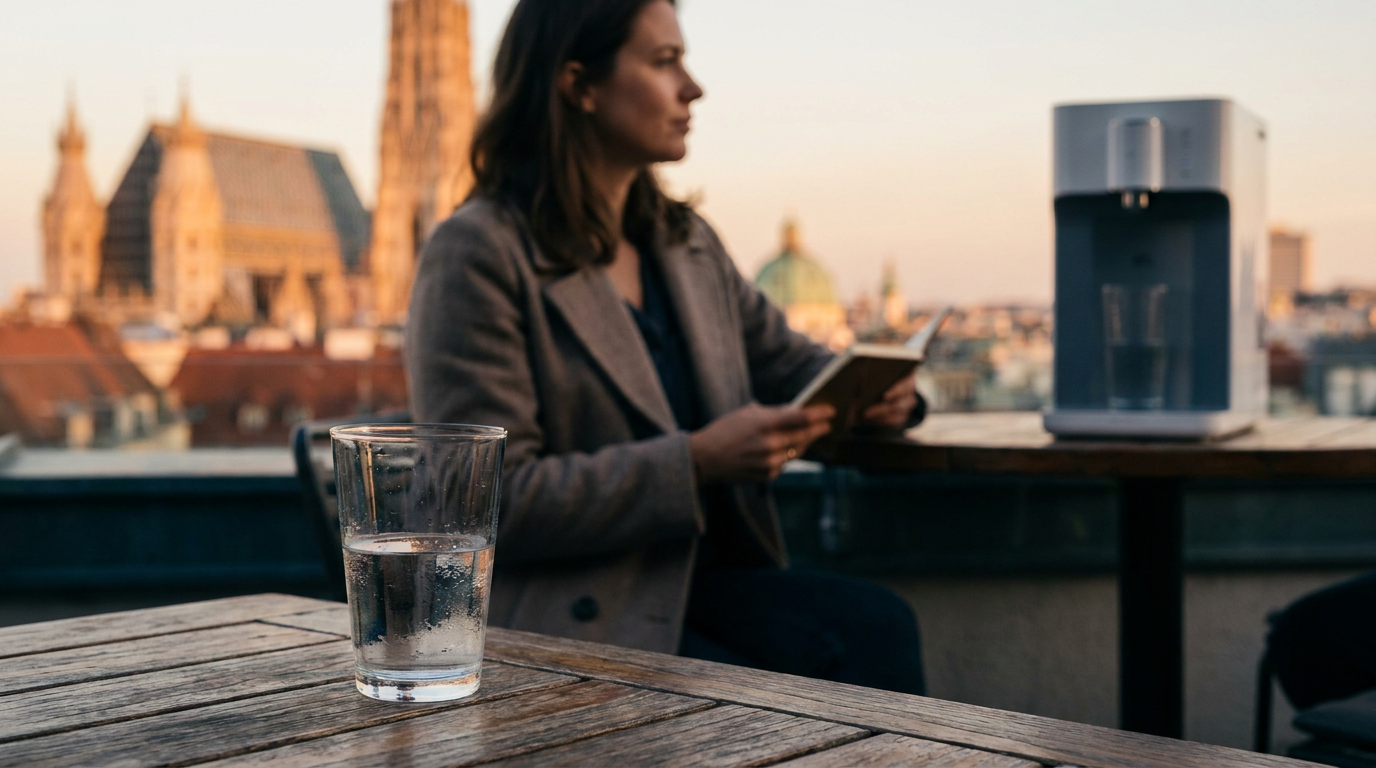
Here is a fact that stops most water cooler investors cold. Some of the most expensive cooler markets in Europe are also among the smallest. A few Alpine and Nordic markets rent a machine for several times what a big market like Spain charges. They run a fraction of the units. Yet they earn far more from each one.
The water dispense trade covers three product types. BWD is bottled water dispense, the classic 19-litre bottle cooler. POU is point of use, a cooler plumbed into the mains. ITS is instant taps, the counter units that pour chilled, hot or sparkling water. Across all three, price per machine swings hard by country. A rented cooler can cost several times more in one country than in another.
The Alpine premium
Austria, Norway and Switzerland sit at the top of the price table. They command the highest bottled and mains-fed rentals in Europe. Our figures come from direct interviews with local operators and data partnerships across 30-plus markets. So we can measure the spread rather than guess it. These three markets earn more per machine than any other in Europe, and they do it with tiny fleets.
Two things drive the premium. First, these markets are overwhelmingly corporate. The customer is a business, usually a company office. Companies pay for service and a clean, reliable tap. Second, the cost base is high. Wages and prices in Switzerland and Norway are among the steepest in Europe, and rentals track that.
They kept the good accounts and dropped the rest
There is a third driver, and it is the one operators can copy. The Alpine markets shed their cheap accounts and kept the ones that pay well. Switzerland saw the sharpest bottled-cooler decline in Western Europe over the past five years. That looks like a market in trouble. It is the opposite. Operators there dropped low-paying homes and marginal sites, and moved the money into serviced corporate contracts.
The fleet got smaller. The revenue per machine went up. A smaller book of well-served business accounts can out-earn a large book of cheap ones. Most operators chase the placement count. The Alpine markets show that pruning a book can raise its worth.
The volume trap
Now look at the other end. Spain runs one of the largest cooler fleets in Europe, built on a home-delivery bottled model. Spain has the units, but it earns among the least per machine, and its bottled coolers churn faster than most. Poland is large too, and still mostly bottled, with almost no instant-tap base. Big unit counts read well in a pitch deck. They hide a thin margin per machine.
This matters most to buyers. A private equity analyst who ranks markets by fleet size will overvalue the big, cheap ones. Unit count tells you how many machines are out there. It says nothing about what each one earns. The number that predicts a good acquisition is revenue per machine, paired with churn. Across Europe, a fleet of roughly 6.5 million machines earns about 2.3 billion euros a year, and that value has grown far faster than the machine count.
None of this writes off bottled coolers. A bottled machine on a serviced corporate contract can out-earn a cheap plumbed one. Bottled does real work where there is no mains supply, on building sites and in factories. The point is about account quality, whatever the format.
What operators and buyers should do
The number that matters most is how much each machine earns. Fleet size is the vanity figure. Rank the book by revenue per account, then look hard at the bottom. Some of those accounts cost more to serve than they bring in. A price rise or an upgrade fixes some. The rest may be worth letting go.
For buyers, the lesson is to underwrite value rather than size. A tidy 40,000-machine Alpine book can be worth more than a sprawling low-price fleet twice the size. The best cooler businesses in Europe grew their revenue by shrinking their fleet. The next few years will reward operators who prune with intent, and buyers who price a book on the quality of its accounts.
📈 Want the benchmarks behind the value gap?
Want exclusive water dispense benchmarks and operator insights? Access data, pricing benchmarks, and strategic intelligence not published anywhere else.
P.S. Weighing up a market you can't see clearly? The 2026 Zenith Water Dispense Market Reports now cover 30-plus markets. Every West and East European market, plus Japan, Turkey, UAE, South Korea and Mexico. Each one is a full bottled, mains-fed and instant-tap model with operator shares, the B2C and B2B split, revenue and a 2019 to 2030 outlook (Excel, written report on request). See the list: waterdispenseinsights.com/reports