A $410m deal priced the filter inside someone else's machine. What it means for the water cooler market
By Zenith Water Dispense Team ·
SPX paid about $410 million for a business that treats water inside other people's machines. For water dispense, the question is who owns the consumable.
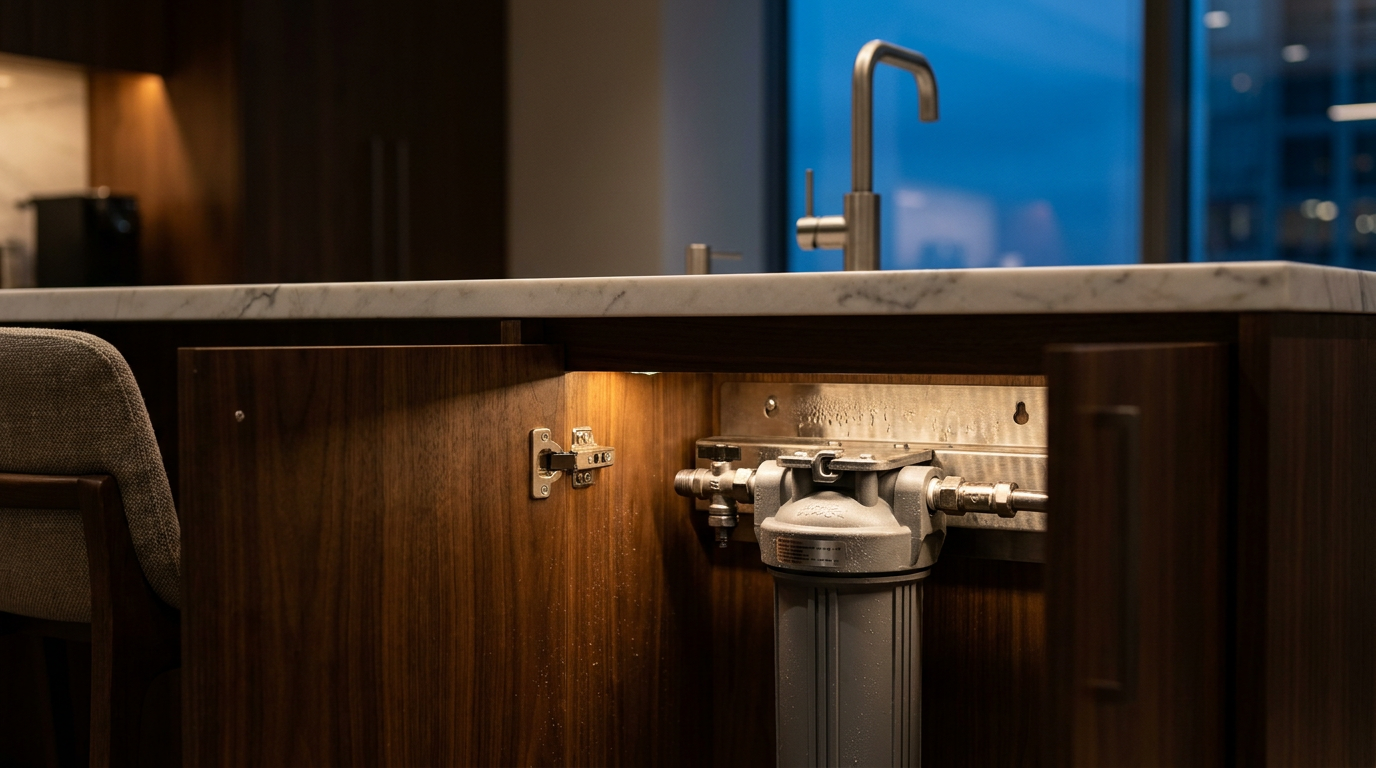
If I ran a water cooler fleet today, my first call would be to whoever makes my filters. A cooling equipment maker has just paid about $410 million for a water treatment business. That target sits inside other companies' machines and employs roughly 120 people.
The buyer is SPX Technologies, listed in the United States. The seller is FIS Water of Fresno, California. SPX closed the deal on 16 September 2026. FIS Water should turn over about $105 million this year. That puts the price near four times sales.
Four times sales for 120 people
Machine makers do not usually trade at four times sales. Businesses that sell what runs through a machine sometimes do. FIS Water takes solids out of commercial cooling water, holds its quality and controls its flow. It sells under five brands.
SPX gave its reason plainly: the two businesses share customers, engineering specifications and sales channels. Put another way, SPX already had the installed base. It did not own what that installed base consumes.
Water dispense split the same way thirty years ago
That split is the shape of this industry. A manufacturer builds the unit. An operator places it, then sells everything that follows. Filters. CO2 cylinders. Sanitisation visits. Spare parts.
POU (point of use) means a mains-fed cooler. ITS (instant taps) means a counter unit for boiling, chilled and sparkling water. In both, the operator's margin sits after the sale. The hardware is a one-off. The consumable is an annuity, and the annuity is the business.
The split held for one simple reason. Manufacturers had no route to the end customer. They sold to operators and distributors, and the operator owned the site.
Connected units moved the information upstream
That reason is weakening. A connected cooler reports its own filter life, its own flow and its own fault codes. The data goes to whoever wrote the firmware. A manufacturer can now know a cartridge is due before the operator does.
It is a short step from knowing to selling. Some have already taken it. Southern Europe already shows it. Zenith's model puts the top instant-tap position in one large market with a manufacturer. Forward integration is not a forecast there. It already sits in the share table.
The tap carries the maker's name
Format matters here. ITS is the fastest-growing water dispense format in Europe. It is also the one where the manufacturer is most visible. A tap sits in a kitchen with a brand on it. Staff read that brand every working day.
Zenith's published 2026 figures put Europe's installed base above 6.6 million units. Revenue across the continent passed €2.5 billion in 2025. Instant taps grew fastest of the three formats in both halves of Europe. That is where a manufacturer could go direct with the least friction.
Nobody sells a bottled operator its water
Bottled dispense sits outside this problem, and it is worth saying why.
Bottled water dispense, or BWD, means a cooler fed by returnable bottles. Those bottles hold 15 or 19 litres. The operator sources the water, fills the bottle and owns it. There is no supplier upstream who can price a bottled operator out of its own refill stream. The consumable is the operator's own product.
That is a structural protection the mains-fed formats do not have. It is one reason bottled remains one of the industry's largest revenue generators. A POU operator buys its cartridges from someone. A bottled operator makes what it sells.
What to settle before your supplier does
None of this says manufacturers will move tomorrow. It says the economics now reward them for trying. A deal has just put a number on how much.
For operators, the route and the relationship are the defensible assets. Anyone can source a filter. Very few can reach several thousand sites on a schedule. For investors, the diligence question changes shape. Ask which party in the chain could be removed without the customer noticing.
If the answer is your client, the multiple should reflect it.
🤝 Need this answered for your own supply chain?
We take on bespoke work for operators, manufacturers and investors across water dispense. Tell us the decision you are sizing, and we will come back on scope and fit.
P.S. Supply chain questions get answered faster when you can see who holds what in a market. Unit-level models for more than thirty countries make up the 2026 Zenith Water Dispense Market Reports. Bottled, mains-fed and instant taps are modelled in each. Operators are named, alongside their volumes, their revenue and a line running to 2030. Consumer and business volumes never sit in the same column. Every European market is in. Beyond Europe the set adds Mexico, the UAE, Japan, Turkey and South Korea, on request. Everything lands as Excel. A written version is there for the asking. Built from direct interviews with local operators and data partnerships in every market we cover. See what your market looks like.