Instant tap sales grew 12% on a four-pence margin. The water cooler market is counting the wrong growth
By Zenith Water Dispense Team ·
New UK accounts show a tap seller growing 12% on about four pence of pre-tax profit per pound. Sales revenue and rental revenue are not the same asset.
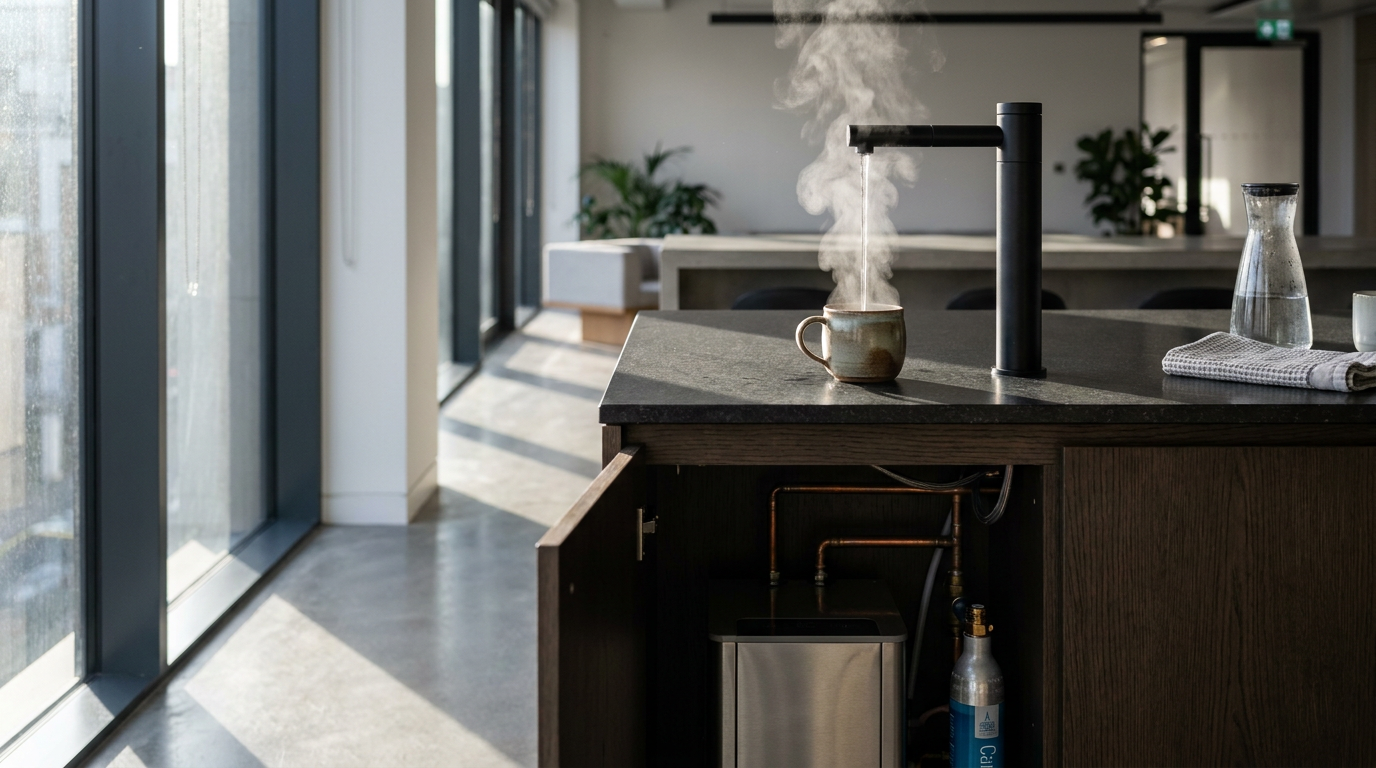
Here is the question I keep putting to boards. What is one pound of instant tap revenue actually worth to you? A tap business in the UK has just published its answer.
Quooker UK filed accounts for the year to 31 December 2025. Turnover rose about 12%, from £83.989m to £93.886m, and pre-tax profit reached £3.881m. That is roughly four pence of pre-tax profit on every pound sold.
Three formats share this market. Take the bottled format first, BWD. It is the cooler with a 19 litre bottle on top and a delivery round behind it. Point of use, or POU, is a cooler joined to the mains supply. Instant tap systems, or ITS, are boiling, chilled and fizzy taps fitted into a counter. Each one can be rented monthly or bought outright. Which way it goes out changes the money completely.
Four pence, three filings running
The 2023 accounts showed £80.6m of turnover and £3.2m before tax. The 2024 set reached £83.989m and £3.392m. The 2025 figures are above. The pre-tax margin has sat near four pence across three consecutive filings.
Cash went from £4.548m to £6.478m over the year. Nothing here looks broken. The company is growing well and converting profit into cash. Four pence in the pound is how this model works. It is not a bad year.
Forty points go missing on the way down the page
Billi's final UK accounts put instant tap gross margin near 44%. Two different companies, two different jobs in the chain. Still, the shape is worth sitting with. A tap leaves the factory on a wide gross margin and arrives at the bottom line worth pennies.
What eats the gap is the cost of winning a single sale. The specifier visit, the quote, the site survey and the install all land on that one unit. None of it spreads across a contract, because there is no contract. Sell twice as many taps and you spend close to twice as much winning them.
A rental machine works the other way. The selling cost is paid once and then billed against for years.
Europe buys the same tap two different ways
Zenith models 31 European markets. The figures come from operator submissions and local data partnerships rather than desk estimates.
Across the whole set, outright equipment sales are a low single-digit share of all dispense revenue. Rental and delivery carry almost everything. Mains-fed coolers barely sell at all, in either half of Europe.
Instant taps break that pattern hard. Roughly three euros in every ten of European instant tap revenue is a sale rather than a rental. And the country spread inside that average is huge. In Germany about three-fifths of instant tap revenue is an outright sale. In Spain it is close to nothing. Italy and Portugal sit near Spain. Denmark and Norway sit past Germany.
So a tap plan written in Munich and one written in Madrid are different businesses. The product name is all they share.
Bottled asks nothing of the building
There is a point here that favours bottled, and it gets forgotten. A bottled cooler needs a socket. A sold tap needs a plumber and a landlord who agrees.
A tap wants a hole in a worktop and a power spur. It also wants spare capacity on the mains and the landlord's consent. A bottled cooler wants none of that. It can open a site the same week the customer asks. A leased office works. So does a listed building, a temporary depot, or a site whose mains is already maxed out.
Bottled keeps earning serious money for exactly that reason. Where the building will not cooperate, bottled is the only format that can trade there at all. The delivery also bills every month without anybody selling again.
What the mix does to a valuation
A buyer does not pay the same price for both pounds. Rental revenue and equipment sales revenue do not earn the same valuation multiple. Contracted, repeating, re-priceable income prices high. An order book that restarts at zero every January prices low.
A plan that adds taps as outright sales lifts the top line. It drags the blended multiple down at the same time. The board reads revenue growth. The buyer reads mix drift. Both are looking at one number.
Put a second line on the page
Growth in this segment is not in doubt. What that growth is made of decides what it is worth. Split the instant tap line in two before you set a target against it.
One line for income that arrives again next year on its own. One line for hardware that sold once. Any operator, investor or buyer can run that split from an existing sales ledger in an afternoon. The target only starts to mean something after it is done.
💬 No brief? Start anyway.
Say in a couple of lines what you are weighing up. We come back with the likely shape of the work and what it should cost. We also say where we would point it first.
P.S. Knowing what a market rents and what it sells is half of knowing what it is worth. Rental income and equipment sales sit on separate lines in the 2026 Zenith Water Dispense Market Reports. Bottled, mains-fed and instant taps each get the same treatment. The European set is complete, all thirty-one of them. Projects that reach further can add Mexico, South Korea, the UAE, Japan or Turkey. What you get is a live Excel model, with the written report on top if you want it. Trusted by industry leaders since 1998. Split your revenue line