Europe's Pre-Bottle Water Cooler Markets: What Latvia and Serbia Tell Operators and Investors
By Zenith Water Dispense Team ·
Most of Europe's water dispense story is about bottled coolers giving way to mains-fed coolers and taps. But two markets, Latvia and Serbia, sit before that story starts: most of their installed base is still passive pumps and stands, with very few powered machines. Here is why these pre-bottle markets hold the longest conversion runway in Europe, and why one runs on a regulatory clock while the other runs on demand alone.
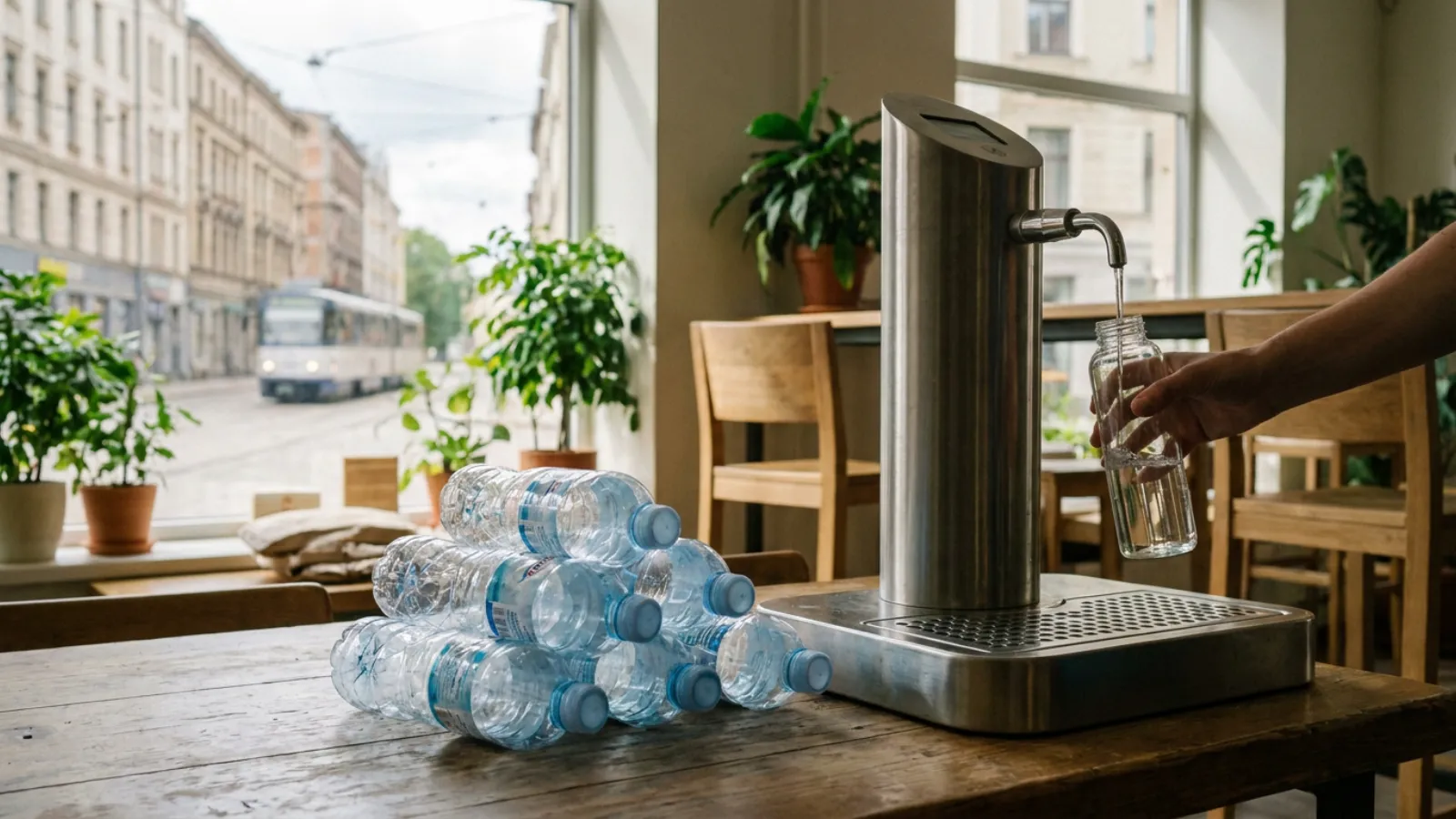
Everyone in water dispense knows the transition story. Bottled coolers give way to mains-fed coolers. Mains-fed coolers give way to instant taps. Western Europe is living through the middle of it. Eastern Europe is early. But two European markets sit before the story even starts: Latvia and Serbia.
First, three quick terms. BWD means bottled water dispense: coolers fed by large refill bottles. POU means point of use: coolers plumbed into the mains. ITS means instant taps: the counter units that pour chilled, hot, or sparkling water.
The markets that run on pumps
In most countries the installed base is at least a powered machine. In Latvia and Serbia, most of the base is not powered at all. It is a passive dispenser: a bottle on a stand, a hand pump, or a ceramic crock. No electricity. No chilling. No filter. Most of Latvia's base is passive, and more than half of Serbia's is too. No other markets in Europe look like this.
So the first upgrade here is passive-to-powered, one step earlier than the bottled-to-mains move that drives the rest of Europe. That makes the conversion runway the longest in Europe. A buyer in Germany is selling taps into a market that already shed its bottles. A buyer in Latvia is still trying to plug the first cooler into a wall.
Why the runway is the longest in Europe
Here is the part that surprises people. These pre-bottle markets are still growing. Latvia has one of the fastest-growing fleets in Eastern Europe. Serbia is growing too. So workplaces want better water, even when the hardware is just a pump on a bottle. Demand is rising before the equipment has caught up.
That gap is the opportunity. When a customer moves from a passive jug to a powered, filtered cooler, the jump is big. They get cold, filtered water and a service contract. The bill goes up. The contract starts. The operator who electrifies a passive account locks in a stickier customer than one who only swaps an old cooler for a newer one. The catch is cost. You have to fund the first machine into a market that has paid almost nothing for water before.
Two markets, two clocks
Latvia and Serbia look alike on a mix chart. Their regulatory calendars are very different. Latvia is an EU member, so the bloc's new bottle rules apply to it word for word. The EU bans new polycarbonate (a hard plastic) cooler bottles from July 20, 2026. Then on August 12, 2026, the PPWR (the EU's packaging law) limits PFAS, the "forever chemicals," in food-contact parts like caps and seals. Both dates push cost onto the bottle.
Serbia is different. It is an EU candidate and has not joined the bloc. So the July and August deadlines do not bind Serbia directly. Latvia has a fixed catalyst on the calendar. Serbia runs on demand alone. Two markets that read the same on paper move on two different clocks.
What this means for operators and buyers
The lesson is simple. In Eastern Europe, the share of the base that is already powered matters more than the bottled-cooler share. A market can look tiny and bottle-light yet still be real money if someone funds the electrification. Latvia and Serbia are the clearest case. Both are pre-bottle markets with a different first step, and screening them as small bottle markets misses the point.
For now, no major operator has named Latvia or Serbia as a growth market in public. That is the signal to watch. The first powered-cooler operator to plant a flag there sets the template for the longest conversion story in Europe. The capital exists: Culligan and Waterlogic together run about $2.4 billion in revenue across 30 countries. These markets will convert in time. The real question is who pays to switch on the first cooler, and whether the regulatory clock even applies.
📊 Need the numbers behind a single market?
From Latvia and Serbia to Germany and Spain, Zenith's single-market reports give you the operator counts, revenue benchmarks, and competitive landscape you need to move with confidence.