The Footfall Market Most Water Dispense Operators Underbid: Gyms, Airports and Stadiums
By Zenith Water Dispense Team ·
A busy stadium can burn through more than 5 million single-use cups a year. One large US airport runs 80 refill points used 7 million times in twelve months. These leisure and transport sites are not offices, yet most water dispense operators price them as if they were. Here is why footfall venues play by different rules, and what that means for operators and investors.
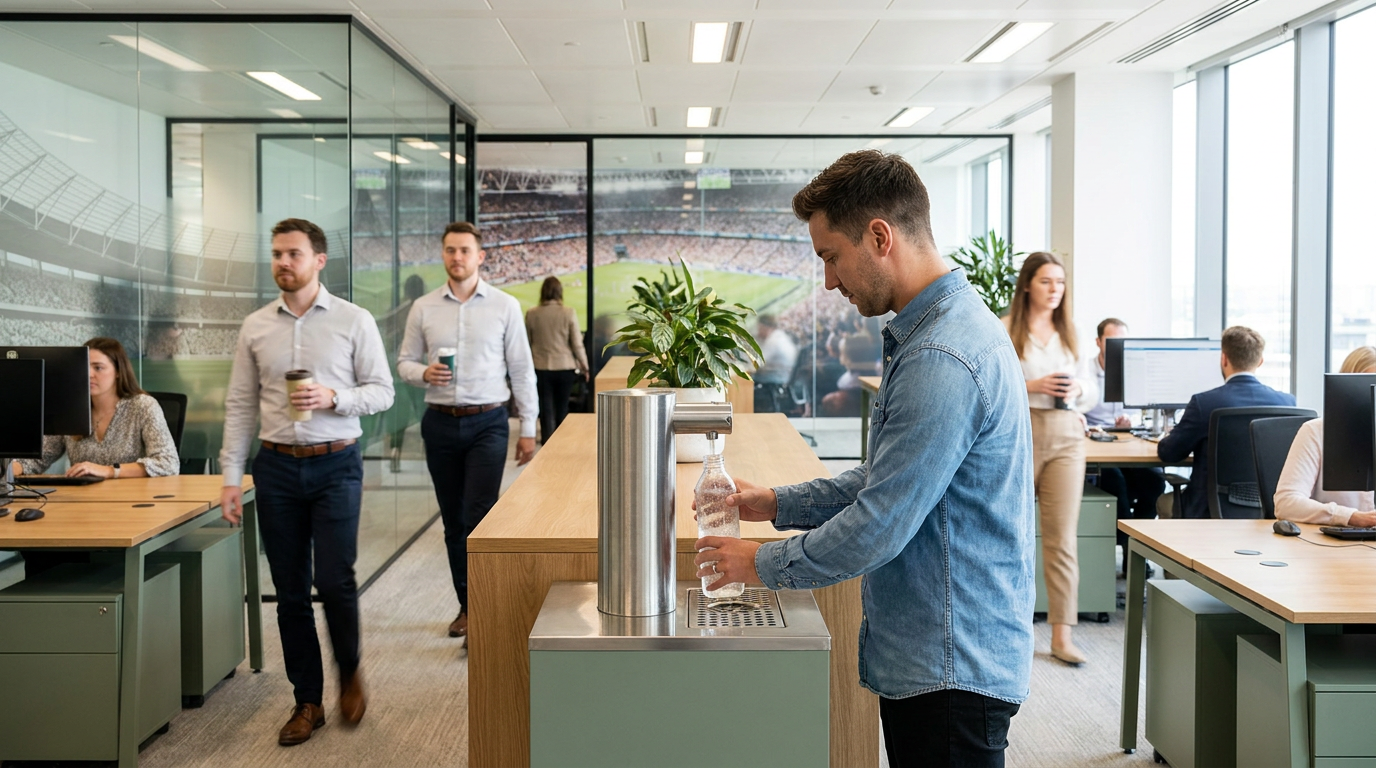
A busy stadium can burn through more than 5 million single-use cups in a year. One large US airport runs 80 water refill points. They were used 7 million times in twelve months. These sites are not offices. Yet most water dispense operators bid for them as if they were.
Leisure and transport is the water dispense market's footfall blind spot. It covers gyms, spas, stadiums, arenas, airports, and rail stations. The demand is huge and rising. The selling model most operators use does not fit it.
Footfall is a different business from headcount
In an office, a hospital, or a school, the machine serves a known headcount. You can model litres per person. You can track the contract, the renewal, and the churn. The buyer is easy to name.
Leisure and transport machines serve footfall. That means people who pass through once. A gym has members, but they come and go by the hour. An airport terminal, a stadium concourse, and a station platform all serve strangers.
The value of a footfall placement is measured per thousand visitors. Headcount barely applies. So the usual metrics miss the point. A unit next to a busy departure gate can out-pour a whole office floor.
What the venue is really buying
The venue is not buying a staff perk. It is buying a way to cut single-use plastic, and a way to prove it.
In footfall venues, the water station is a sustainability tool the site publishes numbers about. Philadelphia airport runs 20 filling stations. It says they have prevented more than 7.5 million plastic bottles since 2018. Minneapolis-St. Paul runs 80 units, used 7 million times last year, cutting about 600 pounds of waste a day. Yankee Stadium has 23 refill stations and plans 21 more.
The buying question is simple: how many single-use bottles will this remove? Bottles-avoided is the headline number the venue wants. Pentair backed the Minneapolis network. In the UK, Culligan, Waterlogic, and Thirsty Work all fit out gyms and leisure sites.
Why this changes the machine and the money
High-traffic units take a beating. They need strong flow, tough build, antimicrobial surfaces, and a fast fill. A pretty boardroom cooler will not last a Saturday at a busy gym.
A footfall unit is picked for throughput and durability. Looks come second. The engineering brief is closer to public infrastructure than to office furniture.
The money works differently too. Many footfall stations are free refill points. The user pays nothing at the tap. The venue pays, often from its facilities or sustainability budget.
The payer is usually the facilities or sustainability team. The water budget rarely signs the cheque. That is a different buyer, with different goals, sitting in a different meeting. An operator who only knows how to sell to an office manager will struggle to reach them.
Where bottled coolers still fit
Bottled water dispense (BWD) still does a real job here. Think pop-up events, outdoor festival stands, temporary fan zones, and remote sites with no mains supply.
Bottled water holds the events and no-mains corner of the footfall market, where a pipe cannot reach. For a one-week festival, a bottle round is often the only sensible answer. For a permanent high-traffic site, mains-fed refill wins on cost per litre and on the plastic-avoided story.
What operators and investors should take from this
Most route operators screen the market by offices and homes, and never build a footfall sales motion. They leave anchor sites to specialists and to the big brands. That is a gap.
As refill rules and plastic bans tighten across Europe, footfall venues turn into anchor placements. They are visible, high-volume, and carry the venue's brand and ESG story. A logo on a station used 7 million times a year is free advertising.
A footfall placement is worth more than its water bill, because it is a public shop window for the operator. For an investor, the read-across is clear. Value these sites on visitor volume and on the length of the deal with the venue or landlord. Value the ESG data they throw off. A book with a few strong footfall anchors carries a different weight from a flat estate of small offices. The operators who learn to sell to the sustainability seat, not just the office manager, own the next demand wave in workplace and public hydration.
📈 Go deeper on the demand behind the numbers
Our water dispense intelligence resource breaks down channel and vertical demand across Europe, so you can see where footfall volume sits and how it is moving.
📊 Analytics & Strategic Insight
Footfall is the demand channel the route-operator playbook was never built to sell.
The decisions most in this industry are avoiding:
👉 They screen the market by offices and homes, so a whole high-volume channel sits outside their sales model.
👉 They price a footfall site on rental yield, when its worth is visitor volume, ESG proof, and brand exposure.
👉 They send an office-contract seller to a buyer who lives in the facilities and sustainability budget.
Here's the full context:
→ 2018: Philadelphia airport starts counting bottles avoided at its filling stations (now 7.5M+, 20 units) — the metric that defines this channel.
→ 2025: Pentair backs the Minneapolis-St. Paul refill network (80 units, 7M uses in a year) — brand and finance interest in public refill.
→ 2026: EU BPA bottle ban (July 20) and PPWR PFAS-in-packaging rules (August 12) raise the cost and scrutiny of single-use plastic across venues.
→ Now: gyms, stadiums, and transport hubs treat refill as a published sustainability KPI, and the buyer is the facilities or ESG seat.
What this means for water dispense operators and investors:
✅ Build a footfall sales motion. The pitch is bottles-avoided and uptime under load, not litres per employee.
✅ Value anchor sites on visitor volume, deal length, and brand exposure, not on the monthly rental line.
✅ Keep bottled where a pipe cannot reach (events, outdoor, no-mains), and lead with mains-fed refill everywhere permanent.
3 moves you can make this week:
1️⃣ Pull your book apart by venue type. Flag any gym, stadium, arena, airport, or station and score it on footfall, not headcount.
2️⃣ Build a one-page "bottles-avoided" proof for a live footfall site. Put the number the venue can publish front and centre.
3️⃣ Map who signs at your target venues. Get in front of the facilities or sustainability lead, not only the office manager.