Brookfield is buying a glass maker whose US tariff hit 50%, so the POU water cooler market should check its next machine order
By Akos Petri, MSc ·
Brookfield is buying PGP Glass for about 1.5 billion euros. The tariff line inside the target's own accounts matters more to water dispense.
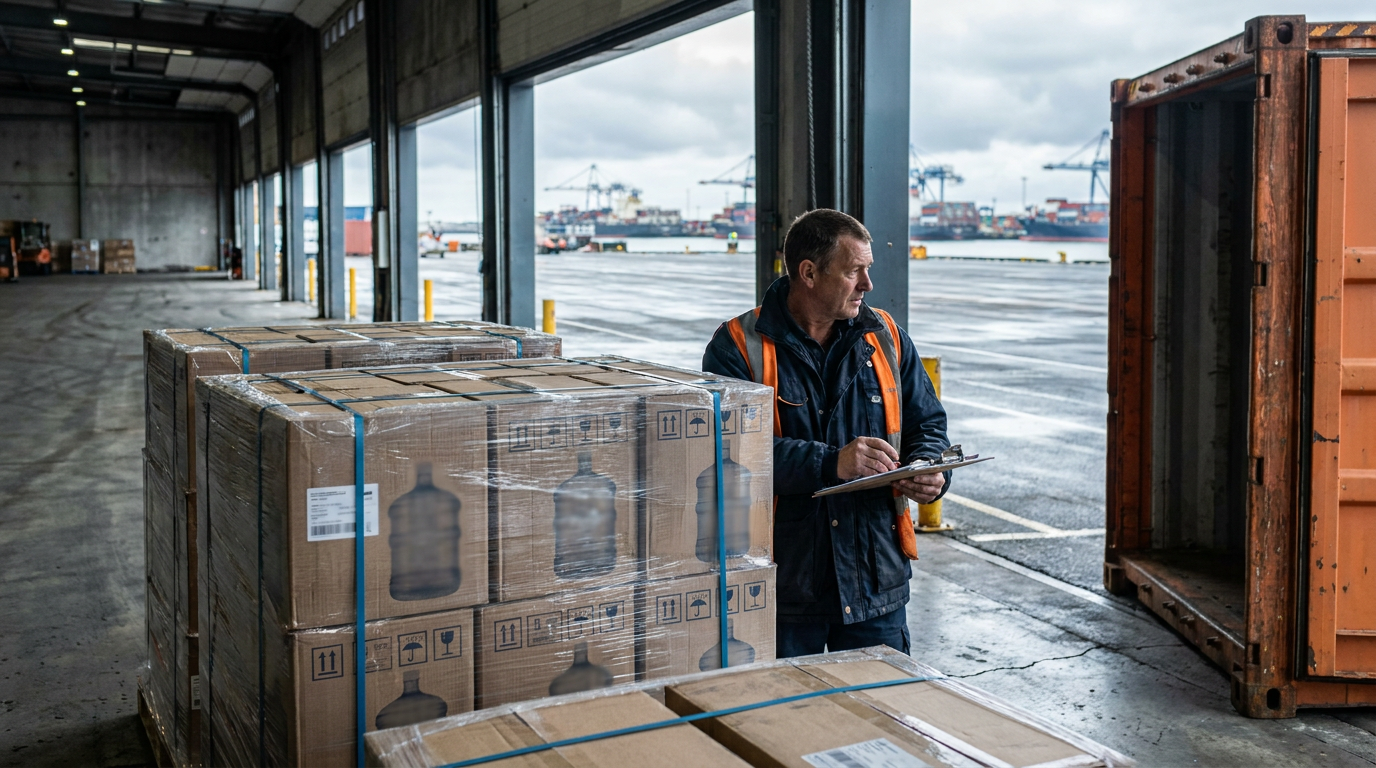
Most of the coverage of Brookfield's glass deal reads it as a packaging story. I read it as a costing warning for anyone who rents out water machines. The company being sold says its own tariff went from 10 percent to 50 percent.
Brookfield is paying for the premium end
Brookfield agreed on 23 November 2026 to buy PGP Glass from funds managed by Blackstone Private Equity. The price is about 1.5 billion euros, announced as 1.7 billion dollars. Completion is expected in the first quarter of 2027. PGP makes specialty glass packaging in India and sells into more than 70 countries. Its end markets are cosmetics, food, beverage and pharmaceuticals.
Blackstone bought the business, then called Piramal Glass, for around 1 billion dollars in 2021. So the headline price sits well above what Blackstone paid. Brookfield says it is buying a leadership position in premium categories. That happens because premium glass is harder to swap out. Brookfield's own wording is “limited substitution risk in premium applications”. Glass has lost share to cans in plenty of other uses.
A border charge lands inside the maker's own margin
PGP's revenue grew from about 29.7 billion rupees in FY2022 to 48 billion rupees in FY2026. The trade press put the latest figure at around 516 million dollars. That works out at roughly 13 percent compound growth a year. That figure is a Zenith calculation rather than a published one.
Then the company described the year as volatile. PGP put it plainly: tariffs rose “from 10% in Q1 to 50% in Q2”. The company said this directly hit its US exports. A maker with concentrated plants and customers in seventy countries carries the border charge itself. Here is why. The customer buys at a landed price. The plant sits behind a customs border. So the charge comes out of the price or the margin. There is nowhere else for it to go.
PGP could at least quote a new price on the next order. That option is the whole difference for dispense.
The rental contract is where dispense carries the same risk
A water dispense operator is in a similar shape. The machine comes from a handful of factories, most of them abroad. The revenue comes from a service or rental contract signed at home. Somebody runs a pipe from the building's water supply into the unit. Engineers describe this as a point of use install, shortened to POU.
Two clocks run at different speeds here. A rental term fixes the monthly fee for two, three or five years. The equipment cost moves between purchase orders. So a cost step reaches the next install while the signed book stays on its old price. Operators are carrying that gap themselves. It widens with every long contract they write.
A long order book plus a long contract term is a position on import costs. Very few operators would describe it that way.
Bottled buys most of its costs at home
Bottled dispense looks better on this one measure. Someone carries a large bottle to the cooler and lifts it on top. Operators write it up as BWD on the fleet list, short for bottled water dispense. Follow where the money is spent. The bottle, the water and the delivery round are bought in the same country that pays for them. The margin arrives with the water, so the machine matters less to the economics.
A bottled round can move its delivery price at the next cycle. So an imported cost step passes through in weeks. That is a real advantage and it is worth saying plainly. A mains-fed book buys its asset once, often in another currency. Then it earns a fixed fee for years.
Sweden's base is almost all machines
Format mix decides how much of a cost base crosses a border. Sweden is the clearest case in our European set. Bottled sits below a tenth of the Swedish installed base. Instant taps are approaching three in ten. A user presses one and gets boiling or chilled water at once. No cooler stands in the room. We log these as instant tap systems, or ITS. Everything else on that base is a mains-fed cooler.
The Swedish bottled base has been in double-digit contraction for years. Trace the exposure. Almost every unit in Sweden is a machine on a contract rather than a bottle on a round. The market that converted furthest to mains-fed is the most exposed to an equipment cost step. Turkey sits at the other end, as the most bottled-dominated model in our set.
The next order is where the cost shows up
Nothing about this deal changes a contract already signed. The next purchase order is where it shows up. Operators writing long rental terms now should price the equipment line with room for trade policy.
Buyers should ask a different question in diligence. Ask where the machines are built and how long the average contract still has to run. The answer sets how much of a cost step the book can absorb. A mains-fed estate with long terms and imported hardware carries a cost risk that rarely reaches the valuation. Diligence should put a number on it. The format that looks most modern is the one that fixed its revenue and floated its costs.
🎯 This is the work, before it becomes a client project
Everything above started as a question somebody asked us about their own numbers. If one is open on your desk right now, that is the moment it is cheapest to answer.
P.S. Trade policy moves faster than a five-year contract, which is the sort of gap the 2026 Zenith Water Dispense Market Reports are built to close. Inside every country file there is the installed base counted separately for instant taps, mains-fed coolers and bottled coolers, the operators behind it with the share each one holds, the household and workplace sides of demand kept apart, and the revenue that sits on top of all of it. Every series runs through to 2030. No European market in the study leans on a regional average. Now that Belgium, Ireland and Portugal are modelled to the same depth, they can be set side by side without a caveat. Whenever a brief reaches Turkey or the UAE, those two are written to the same standard. The workbook goes out first, and the written analysis follows if you want it. The numbers come from the operators themselves, interviewed directly, alongside local data partners in each market. The full study and every single market in it are ordered from the same page, and it is open to you now: https://waterdispenseinsights.com/reports