Your Best Salesperson Drives the Van: Why Route Density Decides the Water Cooler Market
By Zenith Water Dispense Team ·
The most valuable person in a water dispense business drives a van. The recurring service and delivery visit is the cheapest, most trusted way to keep and grow an account, yet most operators treat it as a cost. Route density decides who wins the water cooler market, and few investors price it.
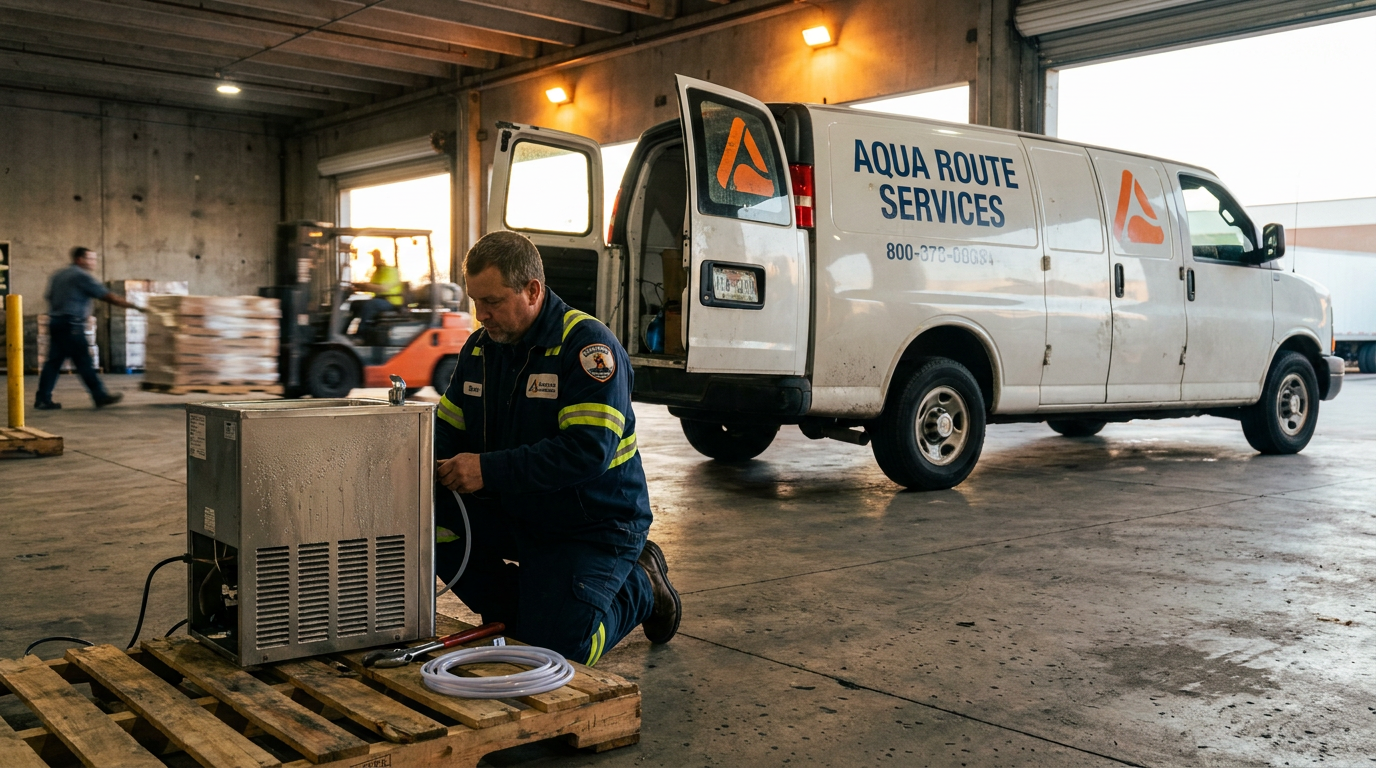
The most valuable person in a water dispense company does not work in sales. They drive a van. Every few weeks they visit a customer to sanitise a cooler, swap a filter, or drop off bottles. That visit is the one guaranteed moment the business stands face to face with the account. Most operators treat this visit as a cost. The smart ones treat it as their cheapest sales and retention channel.
Water dispense is a route business. Coolers need service. Bottled coolers (BWD, bottled water dispense) need delivery. Mains-fed coolers (POU, point of use) need filter changes and sanitisation. So a technician is already scheduled to stand in front of every customer, several times a year, at no extra travel cost. No other channel in this industry gets that kind of repeat, trusted, in-person access. A cold call cannot buy it. A marketing email cannot match it.
Route density is the real moat
Ask why the big operators keep buying small ones. The headline reason is customer count. The deeper reason is route density. When Culligan and Waterlogic combined, they built a network across 30 countries serving more than 100 million people. These deals buy stops-per-van-per-day as much as they buy customers.
Density is what makes the economics work. A van that services ten accounts on one street earns far more per hour than a van driving 40 minutes between jobs. Zenith's own market data, built from direct operator interviews and local data partnerships, shows the same pattern across more than 30 markets. The lowest-churn, highest-value books tend to sit in dense B2B clusters. Germany, the lowest-cancellation market in Europe, is a clear case. Tight urban office clusters keep both service costs and churn down.
The visit that gets wasted
Here is the gap. The technician is trusted. The customer sees them more often than any account manager. Yet in most operators, that person is measured on jobs closed per day and nothing else. The richest sales moment in the business is handed to someone with no reason, and no tools, to use it.
Think about what a route tech can see. A spare desk area that needs its own cooler. An old machine that could move up to a chilled or sparkling tap. A grumble caught before it becomes a cancellation. A filter swap is also a chance to add a service contract or catch an account that was about to leave. These are near-zero-cost sales. The van is already there.
What leaders do differently
The operators pulling ahead are arming the visit. They give the technician a simple app to flag an upsell or a churn risk. They pay a small bonus for a spotted second-machine chance. They send the tech to the account before renewal, not after the complaint. Turning the service route into a sales and retention channel costs almost nothing and lifts revenue per account without winning a single new customer.
This also reframes bottled water. Critics call BWD old-fashioned. But the bottle delivery is a physical visit that POU rivals have to engineer separately. A well-run bottled route is a standing relationship with the customer, delivered to the door, on a schedule. For factories, sites, and places with no mains option, that recurring drop-off is a working asset.
What this means going forward
For operators, the message is plain. Look at your service function before you look at your ad budget. The cheapest growth is already parked outside your customer's building.
For investors and buyers, route density deserves a line in the model. A fleet with tight routes and an instrumented service team is worth more than a bigger fleet scattered thin, even at the same unit count. Ask how many stops a van makes per day. Ask whether the technician can flag a sale. The answers tell you whether you are buying a real network or a list of coolers.
The next edge in water dispense will be won on the road. The operators who put their vans to work as a sales force will keep the accounts everyone else lets slip.
📊 See how the numbers move in your market
Zenith's water dispense country reports track unit counts, channel mix, pricing and churn across 30+ markets, built from direct operator interviews and local data partnerships.