Starbucks kept the better half of China. What is the better half of a water cooler business?
By Zenith Water Dispense Team ·
Starbucks sold control of its China retail business at a 4 billion dollar value. It then told investors the whole position is worth more than 13 billion dollars. That figure counts the retained stake and the brand licence. On 18 September, Reuters reported it is weighing the same move in Japan. Every water dispense operator runs the same two businesses inside one set of accounts. Almost none of them price the halves apart.
There is one question I put to every operator who quotes me a multiple for their book. If a buyer took your customers and left you the vans, which side would you rather hold? Starbucks answered that question with real money.
On 18 September, Reuters reported that Starbucks is weighing a sale of control in its Japan business. The talk is of a value near 3 billion dollars. The harder number sits in the deal it has already done.
Starbucks sold control of its China retail business to Boyu Capital at a 4 billion dollar value. That deal closed in April. Starbucks kept 40% of the venture. It also kept the brand, which it now licenses to the new company. It told investors the whole China position is worth more than 13 billion dollars. That figure counts the sale proceeds, the retained stake and the licence fees to come.
The half Starbucks sold was valued at 4 billion dollars. The half it kept is worth more.
Two businesses inside one set of accounts
The company that runs the shops carries the weight. Leases, fit-outs, staff, stock, and the risk that a site underperforms. The company that owns the brand carries almost none of that. It takes a fee on the sales, year after year. Those two businesses earn very different multiples, and Starbucks has now had both priced in public.
Twelve years of owning a market, and what it returned
Japan is the useful test, because Starbucks has run it both ways. In 2014 it paid about 914 million dollars to buy out its Japanese partner, Sazaby League. That valued the business near 1.5 billion dollars. It had roughly 1,050 shops at the time. By September 2025 it had 1,883, close to 9% of the global estate.
Reuters now puts the business near 3 billion dollars. Twelve years of full ownership moved the value from about 1.5 billion to about 3 billion dollars. That works out at roughly 6% a year. The shop count grew by nearly 80% over the same period. Owning a market outright and compounding inside it are two different results.
The same split sits inside every dispense book
BWD is bottled water dispense. The water turns up on a lorry in large returnable bottles. Somebody lifts each one onto the machine. POU is point of use. There is no delivery, because the cooler draws from the pipe it is plumbed into. ITS is integrated tap systems. One tap in a worktop replaces the kettle, the fridge jug and the bottle.
All three formats hide the same two businesses. One is machines, vans, technicians, depots and working capital. The other is the customer relationship. It holds the billing, the filter schedule and the renewal date. It also holds the right to sell that customer something else. A buyer pays a modest multiple for the first and a much bigger one for the second. Most operators present the two together and accept the blended number.
The route is the one thing nobody can licence
There is an exception here, and it runs in bottled water's favour.
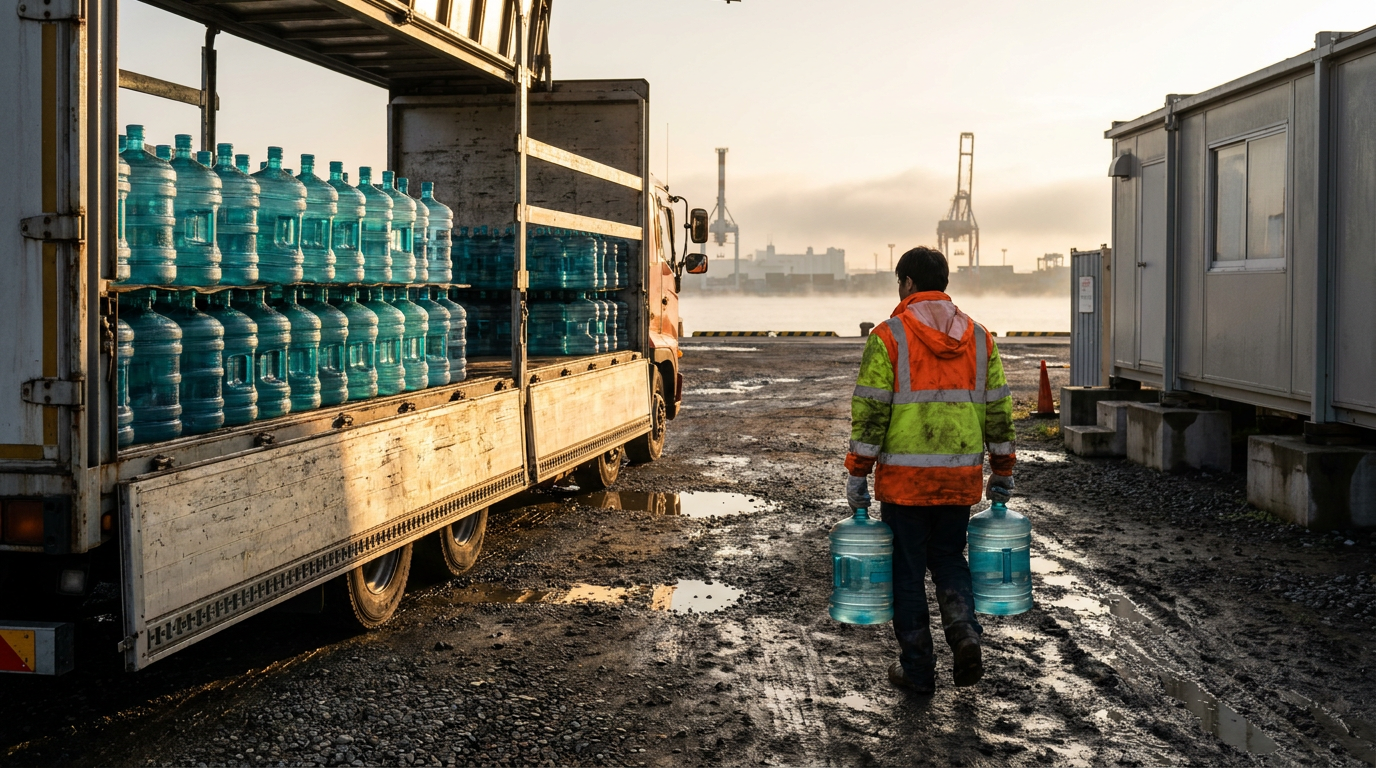
A brand can be licensed. A filter specification can be licensed. A van that reaches a site with no mains connection cannot be licensed to anybody. Construction plots, temporary depots, outdoor events and old buildings all sit outside the mains. So does any site where the water main fails. Bottled is the format that still works there. Those customers have no mains-fed option to switch to.
Where bottled operators go wrong is filing that route only as a cost. On sites the mains cannot reach, it is the scarce asset in the whole market. Mains-fed will keep winning ordinary office work on economics, and that is fair. It does not touch the places only a van can reach.
What Japan says about the growing half
Zenith models Japan, and it is the most consumer-weighted dispense market in our set. Home delivery there grows very slowly. The mains-connected side does the growing. Our numbers come from the companies running the machines, country by country. They are not a model built on top of another model.
A European operator faces the same question Starbucks is acting on. The half that grows and the half that eats capital are rarely the same half.
Three splits to make before a buyer makes them for you
First, report the revenue that survives without the vans separately from the revenue that does not. Second, price the contracted book on its own. Ask what a buyer would pay for the customers alone. Third, check your exit terms. An annuity a client can cancel in thirty days is not an annuity.
The operators who know those three numbers will negotiate their own price. The rest will take a blended one, and never learn what the better half was worth.
🤝 Got a question that does not fit a report?
One market, one format, or a view built around a deal you are working on right now. Send us the brief and we will tell you what it would take to answer it.
P.S. When a buyer looks at your book, which part would they actually pay up for? The 2026 Zenith Water Dispense Market Reports run across more than 30 markets. All of West and East Europe is covered. Japan, Turkey, UAE, South Korea and Mexico are available on request. Every market file models the bottled, mains-fed and instant-tap sides together. It shows who operates, what they hold and how the home and workplace sides divide. It also carries the money and where it all lands by 2030. Excel comes as standard and the written report on request. Built on the world's largest water dispense database. https://waterdispenseinsights.com/reports