Thirteen months to train a Starbucks manager, years to train the POU water cooler engineer
By Zenith Water Dispense Team ·
Starbucks will train a store manager in thirteen months. The engineer a mains fed water dispense book depends on takes years. That gap caps growth.
My first question to an operator planning to double its mains fed book is never about machines. It is about who will service them. Starbucks has just put a public number on that half of the problem.
On 9 November the company said it will open 500 new UK coffeehouses. It will hire 7,500 baristas over five years. About four fifths of the new sites are aimed north of the M25. Further down the release is a training claim. Its Accelerated Leadership Programme aims to make a barista ready to run a store in about thirteen months. The normal route takes roughly three years. Starbucks is telling the market that its growth runs at the speed it can make managers. Sites are the easy part.
The cap on 500 new sites is people
The release puts its existing workforce above 18,000. It is adding 140 deputy store manager roles and 200 more apprenticeship places. Survey work was published alongside it. Ipsos surveyed about 3,400 young people on customer facing work. Sixty-eight per cent of 18 to 35 year olds treat these roles as temporary. Among those doing the job now, only one in ten expects to stay beyond ten years. A site is a lease and a fit-out, and both can be bought. A manager is a two or three year build. That is the line in the plan that moves slowest.
Dispense has the same cap and a longer ladder
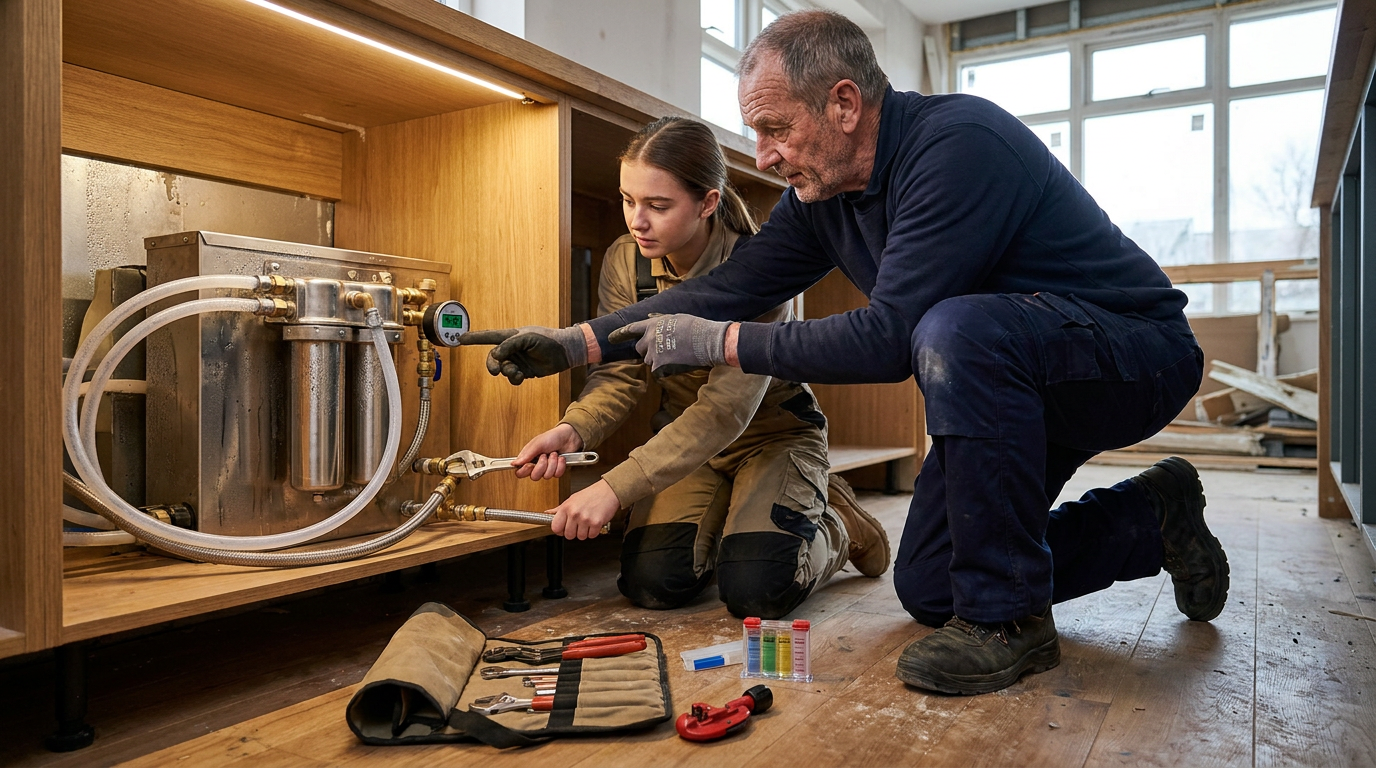
Three service jobs sit behind the three formats. Somebody delivers the water every month, and that part of the book is bottled water dispense, or BWD. A filter change on a mains fed machine belongs to point of use, or POU. Commissioning a boiling and sparkling tap in a kitchen unit is logged under instant taps, or ITS. Bottled puts a van on the road with water on it. A mains fed estate needs a qualified engineer who can touch plumbing, filtration and hygiene. Those are two different hires, and one takes far longer to produce. Our own country models show the installed base tilting steadily towards the formats that need the engineer.
Ireland shows the mix moving under the labour plan
Take Ireland, a market small enough to read in one sitting. Mains fed units there are up by well over a third on 2019. The bottled base sits where it did. Bottles per machine per month have fallen by more than a quarter over the same period. More than three quarters of mains fed units are rented, so the operator keeps the service duty. Close to nine in ten instant taps are sold outright, so the operator takes a fee and leaves.
This is where the Starbucks point lands for dispense. Hospitality holds nearly a third of the Irish instant tap base. For bottled the figure is about four in a hundred. A new coffee site takes a tap. So the biggest new site pipeline in UK food service is mostly a hardware sale. It becomes an annuity only if the operator also sells the service around it.
The bottled round is the job you can fill next month
Bottled gets written off too easily in this argument. A delivery round can be taught in weeks, and an engineer cannot. That makes bottled the format an operator can scale at short notice. It is also the format that keeps a route serviceable when an engineer resigns. Bottled is still a big slice of what the industry bills. In a tight labour market it is the quickest capacity anyone can add. Any plan that retires the bottled round early should name who covers the gap.
What buyers should ask before they price a service book
In Ireland a little over half of cancelled bottled contracts now come back as a mains fed unit. Every one of those conversions moves work from a driver to an engineer. Buyers check churn, contract clauses and revenue per machine. Almost none check engineer tenure, vacancy rates or training time. A service book with no service people is a lease book with a story attached. The winners over the next five years will staff a van as fast as they buy a machine.
🧭 Sketch the decision and we will scope it
Send a few lines on what you are trying to work out. You get back a view on direction, the likely shape of the work, and a cost range.
P.S. Planning headcount around a format mix you have never measured? That is what the 2026 Zenith Water Dispense Market Reports are built for. While Denmark, Finland and the Netherlands read as one northern block, each has its own file. Whichever of Spain or Hungary lands on the desk first, the study already holds it. No European market worth planning around sits outside the set. Mexico, South Korea, the UAE, Turkey and Japan come out of the drawer when asked. There are unit numbers and revenue for bottled, mains fed and instant taps in every file, alongside operator shares, the home and business split, and a year by year run from 2019 to 2030. Sparkling has its own line in every tap count, separate from still. Want the narrative as well? It comes with the data file. This work dates to 1998 and the sector's biggest names still rely on it. Pick up your market here: https://waterdispenseinsights.com/reports