Water cooler market: the route beats the machine, and a big reshuffle just proved it
By Zenith Water Dispense Team ·
A big water company just eliminated its COO role and built a new job around the customer route instead. That choice is a signal for the whole water dispense market: the machine is the commodity, and the recurring customer relationship is the asset a rival cannot copy. Here is how operators and investors should read it.
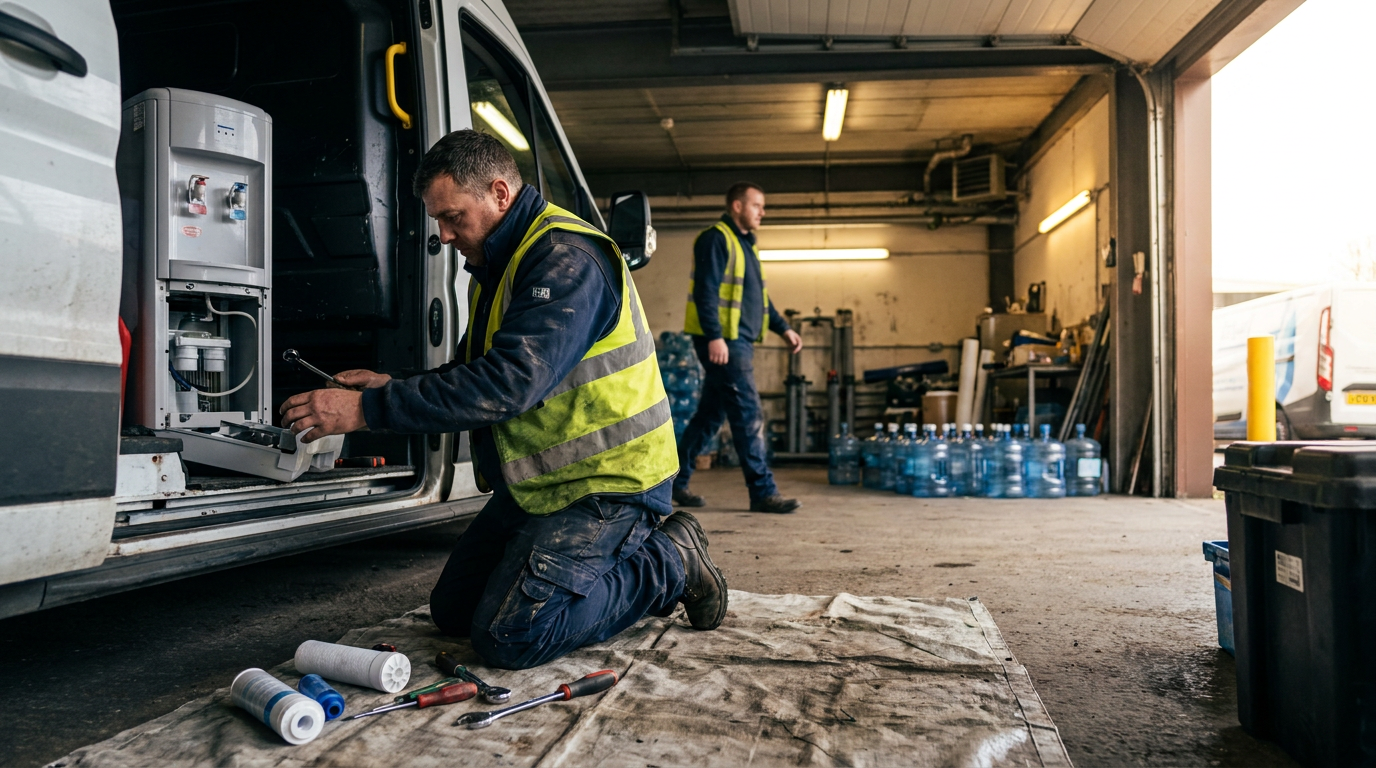
A big water company just eliminated its chief operating officer role. It did not replace him. Instead it created a new job: President of Customer Direct and Go-to-Market. Read that again. The role it kept is the one closest to the customer.
Primo Brands, the largest branded water company in North America, restructured its leadership on 7 July 2026. The chief executive took on operations directly. The COO role goes away by year end. A new president now owns the direct-delivery and go-to-market side. Primo said its Direct Delivery channel is on track for modest growth in the second half of 2026.
That reads like an internal memo. It is a signal. When a company builds its whole structure around the customer relationship, it is telling you where the money is.
What Primo actually did
Primo Brands came from the 2024 merger of Primo Water and BlueTriton. It sells bottled water, refill and filtration, water dispensers, and home and office delivery. Its Direct Delivery arm brings water and coolers straight to the customer on a route. That route is the recurring, in-person part of the business.
The reshuffle put that route at the centre. The company folded a senior operations seat and spent it on a role that owns the customer channel. Org charts are budgets. Where a firm puts its top people shows what it thinks it is really selling.
The lesson for BWD, POU and ITS
The same logic runs through the whole water dispense market. BWD (bottled water dispense) uses 15 or 19 litre bottles. POU (point of use) means mains-fed coolers. ITS (instant taps) are counter-top boiling, chilled and sparkling units. The hardware differs. The asset is the same. The machine is the cheapest, most copyable part of the business. The route and the customer relationship are the parts a rival cannot lift overnight.
Any competitor can buy the same cooler. What they cannot buy is your list of accounts, your delivery density, and the trust built by a service visit that shows up on time. The value in workplace hydration sits in the recurring relationship. The box on the wall is the easy part.
This is why the big deals in the sector are really about route and reach. Culligan and Waterlogic combined to serve well over 100,000 companies across 30-plus countries. The point of that scale is density: more stops per van, more accounts per city, lower cost to serve, and higher switching cost for the customer.
Why org design is a market signal
Primo's move fits a wider read on the sector. Operators that treat delivery and service as a cost line tend to under-invest in them. Operators that treat the route as the product tend to structure around it, staff it well, and defend it. The second group keeps customers longer and earns more from each one.
Zenith's own market data points the same way. We build our numbers from direct operator interviews and local data partnerships across more than 30 markets. In that database, the markets with the lowest cancellation rates are the ones where operators run dense routes and strong service. Germany is the clear example. The markets that leak customers fastest are the ones where the relationship is thin and price is the only tie.
There is a fair case for bottled coolers here too. A bottled delivery is a physical touchpoint by design. The driver is at the door every few weeks. For a no-mains site, a factory floor or an event, that route relationship is a working asset that earns its keep.
What comes next
As growth slows and rates stay high, water companies will keep shifting weight from the hardware to the customer channel that pays year after year. Watch how firms structure their top teams. A president for go-to-market and direct delivery is a tell. So is a service function that reports low and gets little.
For operators, the move is to name your real asset and fund it. Rank your business by route density and by how much each account is worth over time. Units placed is the weakest measure of the three. For investors, read the org chart in diligence. A water company that has organised around its recurring customer relationship is worth more than one still built around the machine.
🧭 Facing a decision like this in your own market?
Describe it in a few lines. Selected enquiries receive an initial strategic assessment: direction, likely scope and indicative investment range.